


Share this article on:
'%3e%3cpath%20d='M0.639648%20-0.000244141H28.2795V27.6396H0.639648V-0.000244141Z'%20fill='black'/%3e%3cpath%20fill-rule='evenodd'%20clip-rule='evenodd'%20d='M11.0067%205.29028H5.12061L12.0994%2014.5084L5.56705%2022.2413H8.58519L13.5259%2016.3926L17.913%2022.1874H23.7991L16.6175%2012.7014L16.6302%2012.7178L22.8136%205.39793H19.7955L15.2035%2010.8338L11.0067%205.29028ZM8.36963%206.90467H10.2021L20.55%2020.573H18.7176L8.36963%206.90467Z'%20fill='white'/%3e%3c/g%3e%3cdefs%3e%3cclipPath%20id='clip0_215_1244'%3e%3crect%20width='27.6398'%20height='27.6398'%20fill='white'%20transform='translate(0.639648)'/%3e%3c/clipPath%3e%3c/defs%3e%3c/svg%3e)

'%3e%3cpath%20d='M0.279785%20-0.000244141H27.9196V27.6396H0.279785'%20fill='black'/%3e%3cpath%20d='M7.94565%209.44696C9.04879%209.44696%209.94306%208.55269%209.94306%207.44956C9.94306%206.34642%209.04879%205.45215%207.94565%205.45215C6.84251%205.45215%205.94824%206.34642%205.94824%207.44956C5.94824%208.55269%206.84251%209.44696%207.94565%209.44696Z'%20fill='white'/%3e%3cpath%20d='M13.4517%2010.4729V21.1617V10.4729ZM7.94531%2010.4729V21.1617V10.4729Z'%20fill='white'/%3e%3cpath%20d='M13.4517%2010.4729V21.1617M7.94531%2010.4729V21.1617'%20stroke='white'%20stroke-width='3.93408'/%3e%3cpath%20d='M15.1792%2015.2236C15.1792%2014.1439%2015.881%2013.0642%2017.1226%2013.0642C18.4182%2013.0642%2018.9041%2014.036%2018.9041%2015.4935V21.1618H22.467V15.0617C22.467%2011.7686%2020.7396%2010.2571%2018.3643%2010.2571C16.5288%2010.2571%2015.6111%2011.2828%2015.1792%2011.9846'%20fill='white'/%3e%3c/g%3e%3cdefs%3e%3cclipPath%20id='clip0_215_1247'%3e%3crect%20width='27.6398'%20height='27.6398'%20fill='white'%20transform='translate(0.279785)'/%3e%3c/clipPath%3e%3c/defs%3e%3c/svg%3e)
A silent paradox characterises the African business landscape. The informal sector accounts for 80-85% of all employment on the continent, yet businesses that rely on informal consumer expenditure are among the hardest to scale sustainably. Informality generates significant economic activity, but it is difficult to predict. Income is uneven, purchasing power is limited, record-keeping is poor, and demand is elastic.
This paradox has become an unavoidable reality for African startups. In recent years, it has driven a steady shift away from consumer-facing products toward enterprise infrastructure: APIs, SaaS applications, logistics layers, and payment rails.
The Silent Product Manager: Macroeconomics
The difficulty of building B2C businesses in Africa is not necessarily a failure of execution; it is often a macroeconomic constraint. Currency devaluation means many startups earn revenue in depreciating local currencies while paying for cloud platforms, software services, and cross-border tools in dollars. Inflation erodes consumers’ purchasing power faster than pricing models can adjust.
These pressures distort unit economics. Customer acquisition costs rise with competition, while average revenue per user remains low. Discounts and promotions become institutionalised rather than tactical. Under these conditions, scale increases losses instead of improving margins.
This is why many consumer startups appear healthy on the surface, with strong engagement and visible brand presence, yet struggle to convert growth into sustainable cash flow.
From Informal Markets to Formal Infrastructure: The Wasoko Example
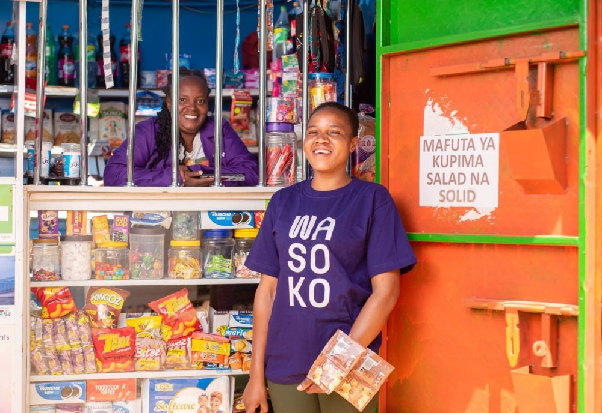
Wasoko, formerly Sokowatch, illustrates how this realisation unfolds in practice.
Sokowatch began as a platform enabling small, informal retailers to place online orders. The opportunity was compelling: millions of corner stores across African cities operate offline, are served inefficiently, and are overlooked by traditional distributors. Early traction validated the thesis.
But as the company scaled, deeper operational realities surfaced. Retailers did not simply need discovery or convenience; they needed reliable supply chains, predictable deliveries, and access to working capital. Adding more merchants increased operational complexity rather than leveraging their capabilities.
The company’s transition was gradual but decisive. Sokowatch stopped thinking of itself as a marketplace and rebuilt around infrastructure. Logistics, warehousing, inventory management, and embedded finance became the core product. The rebrand to Wasoko reflected that shift. It moved from facilitating informal transactions to formalising the operational backbone of informal commerce.
The Infrastructure Moat: Why Selling Shovels Wins
Enterprise SaaS, APIs, and logistics platforms embed themselves within business processes. They are not used occasionally; they form the backbone of operations and demand reliability.
This distinction matters in unstable economies. Businesses will pay to reduce uncertainty through faster settlements, fewer stock-outs, improved compliance, and clearer data. The movement of money, the movement of goods, and risk management are fundamentally infrastructural.
It is no coincidence that investors have increasingly favoured B2B and infrastructure-heavy startups in recent funding cycles. Predictable revenue, clearer unit economics, and stronger retention provide insulation against macroeconomic shocks that consumer businesses absorb directly.
How Startups Transition from B2C to B2B
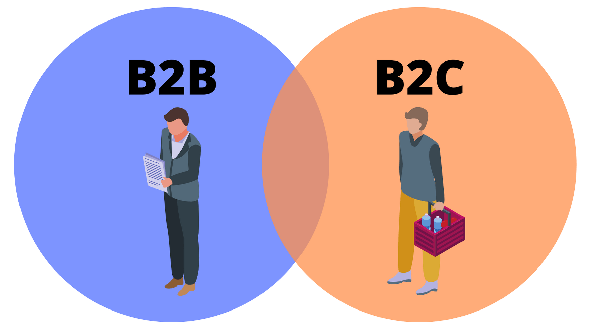
Most successful pivots from B2C to B2B follow a recognisable pattern.
First, founders identify the real payer. This often emerges organically. Businesses begin using the product in unintended ways, requesting custom features or guarantees that individual consumers never demand.
Second, the product is rebuilt for reliability rather than delight. Infrastructure prioritises uptime, accuracy, integrations, and reporting. Dashboards replace feeds. APIs become core. Design serves operations, not engagement.
Third, pricing shifts from volume to value. Micro-transactions and ad hoc fees give way to subscriptions, usage-based pricing, or outcome-linked contracts. Pricing stops being experimental and becomes strategic.
Finally, distribution changes. Enterprise customers are sold to, not acquired virally. Sales-led or hybrid go-to-market models emerge, bringing longer cycles but higher lifetime value.
From the outside, this transition often appears slower. Internally, it is usually the first time that growth aligns with economic conditions.
The Cultural Shift: From Product-Led to Sales-Led
Teams accustomed to product-led growth must adopt sales discipline. Roadmaps are no longer shaped solely by intuition, but by revenue visibility and customer commitments. Engineers build for edge cases and compliance rather than novelty. Success metrics shift from downloads and DAUs to MRR, retention, and expansion revenue.
This is not always comfortable. Sales introduces friction. Growth feels less explosive. But clarity replaces ambiguity. Everyone knows who the customer is, why they pay, and what failure looks like.
In many cases, this cultural reset is what enables startups to survive beyond their initial funding rounds.
A Simple Pivot Scorecard for Founders
Founders considering this shift can ask five questions:
- Do most active users pay, or merely engage?
- Are businesses already deriving measurable value from the product?
- Would losing 10 customers hurt more than losing 10,000 users?
- Are costs dollar-denominated while revenue is local?
- Do investors place greater emphasis on revenue quality than on growth?
Three or more “yes” answers often indicate that the pivot has already begun, whether or not it has been formally acknowledged.
Building What Businesses Cannot Function Without
This transition reflects economic reality. In environments shaped by currency volatility, inflation, and informal consumption, resilience stems from building systems that businesses cannot operate without, rather than products that consumers may abandon.
The most durable technology firms on the continent increasingly work beneath the surface, quietly enabling commerce, reducing friction, and streamlining operations.
In African markets, the most visible apps are not always the winners. The enduring winners are the infrastructure businesses on which everything else depends.
Your next read: How to Build a Sales Funnel That Converts
Loading, please wait...
Share this article on:
Read latest articles

Paul Ugorji’s on Avoiding the Crowdfarming Trap & Bootstrapping ReapVest
September 06, 2026


Stories of Startups that Escaped the Graveyard
August 28, 2026