

Share this article on:
'%3e%3cpath%20d='M0.639648%20-0.000244141H28.2795V27.6396H0.639648V-0.000244141Z'%20fill='black'/%3e%3cpath%20fill-rule='evenodd'%20clip-rule='evenodd'%20d='M11.0067%205.29028H5.12061L12.0994%2014.5084L5.56705%2022.2413H8.58519L13.5259%2016.3926L17.913%2022.1874H23.7991L16.6175%2012.7014L16.6302%2012.7178L22.8136%205.39793H19.7955L15.2035%2010.8338L11.0067%205.29028ZM8.36963%206.90467H10.2021L20.55%2020.573H18.7176L8.36963%206.90467Z'%20fill='white'/%3e%3c/g%3e%3cdefs%3e%3cclipPath%20id='clip0_215_1244'%3e%3crect%20width='27.6398'%20height='27.6398'%20fill='white'%20transform='translate(0.639648)'/%3e%3c/clipPath%3e%3c/defs%3e%3c/svg%3e)

'%3e%3cpath%20d='M0.279785%20-0.000244141H27.9196V27.6396H0.279785'%20fill='black'/%3e%3cpath%20d='M7.94565%209.44696C9.04879%209.44696%209.94306%208.55269%209.94306%207.44956C9.94306%206.34642%209.04879%205.45215%207.94565%205.45215C6.84251%205.45215%205.94824%206.34642%205.94824%207.44956C5.94824%208.55269%206.84251%209.44696%207.94565%209.44696Z'%20fill='white'/%3e%3cpath%20d='M13.4517%2010.4729V21.1617V10.4729ZM7.94531%2010.4729V21.1617V10.4729Z'%20fill='white'/%3e%3cpath%20d='M13.4517%2010.4729V21.1617M7.94531%2010.4729V21.1617'%20stroke='white'%20stroke-width='3.93408'/%3e%3cpath%20d='M15.1792%2015.2236C15.1792%2014.1439%2015.881%2013.0642%2017.1226%2013.0642C18.4182%2013.0642%2018.9041%2014.036%2018.9041%2015.4935V21.1618H22.467V15.0617C22.467%2011.7686%2020.7396%2010.2571%2018.3643%2010.2571C16.5288%2010.2571%2015.6111%2011.2828%2015.1792%2011.9846'%20fill='white'/%3e%3c/g%3e%3cdefs%3e%3cclipPath%20id='clip0_215_1247'%3e%3crect%20width='27.6398'%20height='27.6398'%20fill='white'%20transform='translate(0.279785)'/%3e%3c/clipPath%3e%3c/defs%3e%3c/svg%3e)
Over the past decade, Africa’s tech ecosystem has evolved rapidly, and women's contributions cannot be overstated. Across the continent, women have built multimillion-dollar startups that are shaping culture, solving critical problems, and driving economic change. Africa boasts the world's highest rate of female entrepreneurship, with roughly 1 in 4 women engaged in starting or running businesses, far surpassing global averages. Yet women-led startups receive a tiny fraction of venture capital: in 2025, women-only founded ventures captured just 0.9% of total funding ($28.8 million out of $3.2 billion), one of the lowest shares on record.
Beyond capital, many African female founders face invisible barriers long before the first pitch deck or product launch. Challenges begin with societal expectations: in many communities, a woman's ambition is weighed against family duties, caregiving roles, and cultural norms of conformity. The question is rarely "Can she build a company? But often, "Should she, given everything else expected of her?” Against these odds, African women have made significant progress toward gaining recognition and momentum in the tech ecosystem. A new generation of founders has built monumental companies, scaled industries, and redefined leadership in innovation. Among them are five women who didn’t just build successful companies; they cracked the founder’s code in Africa’s tech ecosystem.
1. Jihan Abass — East Africa (Kenya)
Sector: Insurtech (Insurance Technology)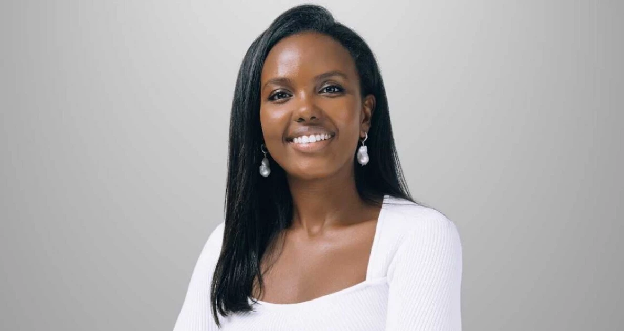
Jihan Abass is the founder and CEO of Lami Insurance Technology (Lami), a Nairobi-based B2B2C Insurance-as-a-Service (IaaS) platform and API that enables businesses, such as banks, fintechs, ride-hailing apps, and e-commerce platforms, to seamlessly embed and distribute affordable digital insurance products within their existing apps and services. She also launched Lami Direct Insurance, Kenya's pioneering digital-only vehicle insurance offering, to make coverage quick and accessible for everyday consumers.
Why she fits in
Jihan perfectly embodies "cracking the founder code" in a high-barrier industry where Africa's insurance penetration hovers around 2-3% (far below the global average), leaving millions unprotected from financial shocks. By leveraging technology to digitise the entire value chain from policy creation to claims, she addresses a massive $68 billion protection gap while creating scalable, inclusive solutions tailored to underserved markets. Her story aligns with the article's theme of building against systemic odds, as one of the few women leading insurtech in Africa. She's a trailblazer who left a stable international finance career to tackle a continent-wide problem, earning recognition in lists like Business Daily's Top 40 Under 40 and as a voice in Africa's innovation ecosystem.
Key highlights
- Gender bias and funding droughts - As a female founder in a male-dominated insurance and tech space, she faced repeated rejections during fundraising. Women-led African startups historically receive a tiny fraction of VC (often under 1-2% in early years), yet she persisted and secured significant rounds: $1.8 million seed in 2021, followed by a $3.7 million extension in 2022 (totalling $5.5 million), led by investors like Harlem Capital. Sources describe her as one of Africa's first female founders to land major venture funding in insurtech, challenging norms and proving women can secure competitive valuations.
- Leaving security for impact - After building a career as a commodity futures trader in London (trading sugar on NY and London markets), she quit a high-profile role post-MBA from Oxford (and undergrad from Bayes Business School) to return to Kenya. Inspired by a casual conversation revealing that many Kenyans lack basic coverage, she initially bootstrapped amid COVID-era market freezes and infrastructure gaps.
- Industry and ecosystem barriers - Insurance in Africa suffers from distrust, complex processes, high costs, and poor distribution. Regulatory hurdles, limited digital penetration in rural areas, and the need to build trust from scratch added to the difficulties. Yet she pivoted to an embedded model that removes friction, scaling partnerships across Kenya and expanding into markets such as Egypt, Nigeria, and Uganda.
- Personal resilience - She has spoken openly about founder stress, the isolation of a few female peers for mentorship on team management or assertive negotiating, and the mental toll of persistent "no's." Her journey highlights how rejection became redirection, turning global finance expertise into localised innovation.
2. Nadia Doghri - North Africa (Tunisia)
Sector: Fintech (Enterprise Payments & HR Tech)
Nadia Doghri is the co-founder of Paymaster, a Tunisia-based fintech platform that digitises payroll, HR payments, and business disbursements for companies across North Africa. Paymaster streamlines enterprise financial operations by enabling seamless, efficient salary payments, expense reimbursements, and other HR-related transactions, reducing paperwork, delays, and costs in a region where traditional banking and payroll systems remain fragmented and manual for many SMEs and larger firms.
Why she fits in
Nadia exemplifies "cracking the founder code" by addressing a critical yet underserved niche in African fintech: enterprise-side financial infrastructure. While consumer fintech (such as mobile money and savings apps) has exploded across the continent, B2B/enterprise solutions for payroll and payments lag behind, especially in North Africa, where regulatory complexity, banking access gaps, and legacy systems hinder business efficiency. By building a scalable digital platform tailored to local needs, she drives financial inclusion for businesses, improves employee cash flow, and boosts operational productivity, thereby contributing to broader economic resilience. As a female co-founder in a male-dominated fintech space, she highlights how women-led ventures address systemic gaps through high-impact, revenue-generating models. Her story adds essential North African representation to our Pan-African lineup, contrasting consumer-focused fintech with enterprise tools that enable wider economic participation.
Key highlights
- Navigating an underserved regional ecosystem - North Africa's startup scene receives less VC attention than East or West Africa, with fewer dedicated funds and slower adoption of fintech innovations. Enterprise fintech faces additional hurdles: strict banking regulations, integration challenges with legacy systems, and building trust with businesses accustomed to cash or manual processes. Nadia co-founded Paymaster to fill this gap, scaling in a market where such solutions are historically rare and under-invested.
- Gender and structural barriers in fundraising - Female-led startups across Africa raise significantly less capital on average, even when controlling for sector and stage. In North Africa, where ecosystems are smaller and more concentrated, women founders face compounded bias from investors, partners, and networks. Despite this, Nadia has built a revenue-generating business, managing teams and pursuing growth in a challenging funding landscape.
- Building cross-border relevance in MENA - Expanding payroll tech across North Africa involves harmonising diverse regulations, currencies, and banking infrastructures, as well as logistical and compliance challenges that amplify the "against the odds" factor. Her persistence in digitising a traditionally opaque process demonstrates the grit needed to create tools that empower businesses and workers alike.
- Broader context of resilience - As profiled in the 2026 IWD recognitions, Nadia operates in an environment where women in tech face isolation, limited mentorship, and higher scrutiny. Yet she has positioned Paymaster as a practical solution to real enterprise pain points, proving that innovation thrives when founders tackle overlooked problems head-on.
3. Nneile Nkholise - South Africa
Sector: Healthtech / Biotech (with focus on 3D printing and additive manufacturing for medical devices)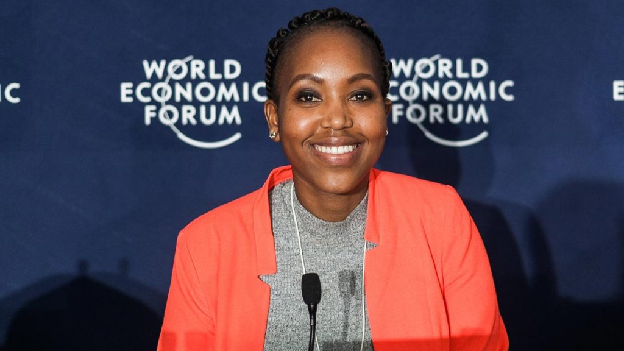
Nneile Nkholise is the founder of iMed Tech Group (also referred to as iMed Tech), a South African biotechnology company she established in 2015. The company pioneered the use of 3D printing (additive manufacturing) and CAD/CAM techniques to create custom-fitted external breast prostheses for women who have undergone mastectomies due to breast cancer. These affordable, personalised solutions addressed a critical gap in post-mastectomy care, where traditional prostheses were often expensive, ill-fitting, or unavailable in many African contexts. Her work extended medical design and engineering to fill the growing demand for high-quality, accessible prosthetics, earning her widespread acclaim as a pioneer in African healthtech innovation.
Why she fits in
Nneile perfectly captures "cracking the founder code" by turning advanced engineering into life-changing, localised solutions in a continent where access to medical devices remains severely limited, especially for cancer survivors facing high costs and supply shortages. Her innovations demonstrate how technology can address healthcare inequities, making personalised prosthetics more affordable and culturally sensitive, while showcasing female leadership in STEM-heavy fields such as biotech and additive manufacturing. With awards including Forbes 30 Under 30 Africa, World Economic Forum recognition as Africa's top female innovator (2016), South African Youth Awards Presidential honour for Science, Innovation and Technology (2017), and ongoing features in 2025-2026 global forums, she represents sustained impact and resilience.
Key highlights
- Breaking into a male-dominated, high-tech field as a Black woman - Starting as a mechanical engineer in South Africa's public sector (Free State Public Works Department, 2011), she entered entrepreneurship in a sector where Black women are underrepresented and face isolation, bias, and limited mentorship. She has openly described the loneliness and difficulty of being a Black woman founder in engineering/tech, yet she built iMed Tech from the ground up, mastering CAD, additive manufacturing, and biomedical applications despite scarce resources and networks.
- Funding and ecosystem challenges in healthtech/biotech: African startups in deep-tech sectors like medical devices attract even less VC than general fintech or agritech, due to high R&D costs, regulatory hurdles (e.g., medical approvals), and the need for specialised equipment. Nneile bootstrapped and navigated these barriers to commercialise 3D-printed prostheses, proving viability in a market often overlooked by global investors.
- Personal drive amid systemic gaps - Born in Lesotho and educated in South Africa (with degrees in mechanical engineering and computer science), she identified a real-world need for affordable, custom prosthetics for African women post-mastectomy while facing broader healthcare access issues on the continent. She pivoted from public-sector engineering to entrepreneurship in 2015, scaling impact despite economic volatility, limited infrastructure for advanced manufacturing, and the emotional weight of working in cancer care.
In part 2 of this two-part series, we explore two additional women who have successfully cracked the founder code in Africa.
Loading, please wait...
Share this article on:
Related quiz
Other
Quiz: 5 African Women Who Cracked the Founder Code — Part 1
Test your knowledge of the five female founders, their industries, and the challenges they overcame in Africa's startup ecosystem.
Read latest articles

Paul Ugorji’s on Avoiding the Crowdfarming Trap & Bootstrapping ReapVest
September 06, 2026


Stories of Startups that Escaped the Graveyard
August 28, 2026