


Share this article on:
'%3e%3cpath%20d='M0.639648%20-0.000244141H28.2795V27.6396H0.639648V-0.000244141Z'%20fill='black'/%3e%3cpath%20fill-rule='evenodd'%20clip-rule='evenodd'%20d='M11.0067%205.29028H5.12061L12.0994%2014.5084L5.56705%2022.2413H8.58519L13.5259%2016.3926L17.913%2022.1874H23.7991L16.6175%2012.7014L16.6302%2012.7178L22.8136%205.39793H19.7955L15.2035%2010.8338L11.0067%205.29028ZM8.36963%206.90467H10.2021L20.55%2020.573H18.7176L8.36963%206.90467Z'%20fill='white'/%3e%3c/g%3e%3cdefs%3e%3cclipPath%20id='clip0_215_1244'%3e%3crect%20width='27.6398'%20height='27.6398'%20fill='white'%20transform='translate(0.639648)'/%3e%3c/clipPath%3e%3c/defs%3e%3c/svg%3e)

'%3e%3cpath%20d='M0.279785%20-0.000244141H27.9196V27.6396H0.279785'%20fill='black'/%3e%3cpath%20d='M7.94565%209.44696C9.04879%209.44696%209.94306%208.55269%209.94306%207.44956C9.94306%206.34642%209.04879%205.45215%207.94565%205.45215C6.84251%205.45215%205.94824%206.34642%205.94824%207.44956C5.94824%208.55269%206.84251%209.44696%207.94565%209.44696Z'%20fill='white'/%3e%3cpath%20d='M13.4517%2010.4729V21.1617V10.4729ZM7.94531%2010.4729V21.1617V10.4729Z'%20fill='white'/%3e%3cpath%20d='M13.4517%2010.4729V21.1617M7.94531%2010.4729V21.1617'%20stroke='white'%20stroke-width='3.93408'/%3e%3cpath%20d='M15.1792%2015.2236C15.1792%2014.1439%2015.881%2013.0642%2017.1226%2013.0642C18.4182%2013.0642%2018.9041%2014.036%2018.9041%2015.4935V21.1618H22.467V15.0617C22.467%2011.7686%2020.7396%2010.2571%2018.3643%2010.2571C16.5288%2010.2571%2015.6111%2011.2828%2015.1792%2011.9846'%20fill='white'/%3e%3c/g%3e%3cdefs%3e%3cclipPath%20id='clip0_215_1247'%3e%3crect%20width='27.6398'%20height='27.6398'%20fill='white'%20transform='translate(0.279785)'/%3e%3c/clipPath%3e%3c/defs%3e%3c/svg%3e)
In part one of this two-part series, we looked at three women who have successfully cracked the founder code. In this second part, we highlight two more women who have built successful ventures and are making an impact on the continent.
1. Jenny Ambukiyenyi Onya - Central Africa (Democratic Republic of Congo - DRC)
Sector: Agritech / AI for Agriculture & Financial Inclusion (Livestock Tech)
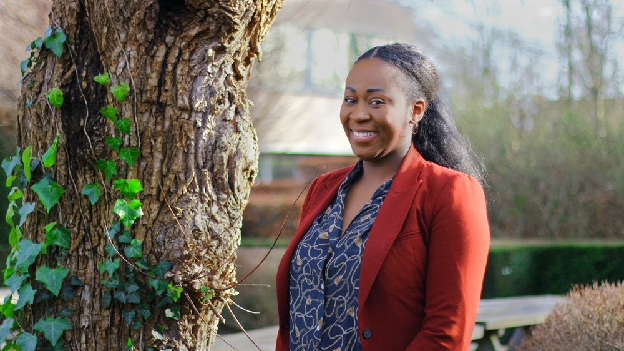
Jenny Ambukiyenyi Onya is the co-founder and CEO of Neotex.ai (with operations in Neotex.ai RDC in the DRC and Neotex.ai Belgium), a startup building AI-powered tools for agriculture and livestock management. Its flagship product, Halisi Livestock, uses smartphone-based facial recognition to digitise and identify livestock (e.g., by photographing a cow's face), enabling smallholder farmers, especially women in rural areas, to register herds, access financial services, improve productivity, and unlock credit. This transforms traditionally "unbankable" livestock assets into verifiable collateral, bridging the gap between informal rural economies and formal finance.
Why she fits in
Jenny embodies "cracking the founder code" by solving intertwined challenges of food security, financial exclusion, and gender inequities in one of Africa's most underserved regions. In the DRC, where conflict, poor infrastructure, and limited digital access trap rural women in poverty cycles, her AI innovation creates data-driven trust, turning herds into sources of finance and empowerment.
As a winner of the TechFoundHER Africa Challenge (2025, equity-free grant as part of winners receiving over $100,000 total), recipient of African Development Bank (AfDB) AFAWA support (Affirmative Finance Action for Women in Africa), and featured in global spotlights like World Youth Skills Day 2025, she represents rising Central African innovation.
Key highlights
- Operating in one of the world's toughest environments, the DRC faces ongoing conflict, extreme infrastructure deficits (limited electricity, internet, and roads), political instability, and one of the lowest digital penetration rates in Africa. Building and scaling a tech startup here, especially one reliant on smartphones and AI in rural areas, requires extraordinary resilience amid security risks, supply chain disruptions, and unreliable basics that most founders take for granted.
- Funding and ecosystem isolation for female founders in Central Africa - The region's startup scene attracts little VC compared to East or West Africa, and women founders face compounded gender bias, limited networks, and scarce mentorship. Jenny secured critical non-dilutive support (e.g., the TechFoundHER grant and the AfDB AFAWA program) after demonstrating product-market fit, turning "no's" into validation, and enabling expansion into rural Kenya (registering over 1,250 livestock heads).
- Adapting advanced AI to hyper-local challenges - Traditional livestock financing relies on manual, error-prone methods or excludes smallholders due to a lack of verifiable records. Jenny engineered Halisi Livestock to work offline-capable on basic smartphones, addressing literacy, connectivity, and cultural barriers while building trust with banks and microfinance institutions, innovating in a space where global AI tools often fail local contexts.
- Personal grit as a young Congolese woman engineer - As a female AI expert and founder in STEM, she navigated isolation, scepticism toward tech solutions in agriculture, and the emotional toll of working on solutions for vulnerable communities. Her journey from engineering roots to co-founding dual entities (DRC and Belgium) highlights persistence, strategic pivots (e.g., refining the product through AFAWA guidance), and a commitment to impact over ease.
2. Odunayo Eweniyi — West Africa (Nigeria)
Sector: Fintech (Digital Savings & Micro-Investments)
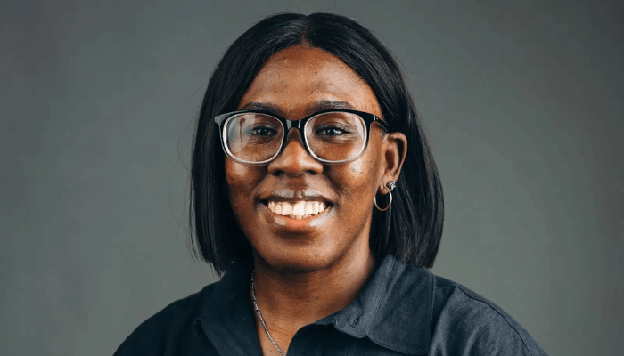
Odunayo Eweniyi is one of Nigeria’s most remarkable tech entrepreneurs, social activists, and ecosystem enablers. She is widely recognised as the Co-founder and Chief Operations Officer (COO) of PiggyVest, West Africa's first and largest digital savings and micro-investment platform. Odunayo Eweniyi also co-founded FirstCheck Africa, a fund dedicated to backing early-stage startups with at least one female co-founder, aiming to close the gender funding gap in tech. Eweniyi has played a pivotal role in shaping Nigeria’s fintech and entrepreneurial landscape through several key ventures: Plur Africa, PushCv and Carousel Network.
Why she fits in
Odunayo perfectly captures "cracking the founder code" by spotting a cultural behaviour of Nigerians' love for disciplined, offline saving and transforming it into a scalable, tech-driven solution that addresses financial inclusion in a market where trust in banks is low, cash dominates, and many lack access to reliable saving tools.
PiggyVest has grown into one of Africa's top fintechs (recognised in global lists such as CNBC's Top 250 Fintechs), with nearly 6 million users and major milestones (e.g., ₦2 trillion+ in payouts). As a female co-founder in Nigeria's competitive fintech space, she built a revenue-generating giant that promotes financial discipline and inclusion, while co-founding initiatives such as FirstCheck Africa (to fund female-led startups) and the Feminist Coalition (for women's rights and socio-economic empowerment).
Key highlights
- Gender bias and investor scepticism in early fintech - Launching as a woman in 2016, Nigeria's nascent fintech scene meant facing compounded barriers: widespread distrust of digital finance, a payment ecosystem not geared toward startup investing, and gender gaps in VC, where female founders receive minimal VC. Eweniyi has spoken about frustrating rejections, needing to be "overprepared" with metrics to prove viability, and hearing excuses why investors "couldn't find women to fund." Yet she and her team persisted, initially bootstrapping with personal funds and side jobs, then securing key wins such as the Village Capital Fintech Accelerator and a $1.1 million seed round in 2018.
- Building trust in a sceptical, cash-heavy market - Early days involved educating users on digital security amid low trust in online platforms, resource constraints, and the need to partner with cautious banks and investors. The team adapted by focusing on transparency, user education, and viral growth via social media (memes, quips, and Twitter traction from the original "kolo" tweet), turning scepticism into adoption.
- No prior "tech founder" blueprint - Fresh out of university (first-class Computer Engineering from Covenant University), with no deep tech background, she learned strategy, operations, and scaling on the job through Google, books, relentless execution, and prior ventures (e.g., pushcv.com job site). Bootstrapping meant funding growth personally while navigating failures, economic volatility, and the isolation of a few female peers in leadership.
Conclusion
These five women, Jihan Abass, Odunayo Eweniyi, Nadia Doghri, Nneile Nkholise, and Jenny Ambukiyenyi Onya, did not wait for permission, perfect conditions, or equal funding to build. They cracked the founder code by turning systemic barriers into fuel: gender bias into bolder pitches, cultural expectations into unbreakable resolve, funding droughts into bootstrapped ingenuity, and isolation into mentorship networks that lift others.
In a continent where women start businesses at the world's highest rates yet capture a mere fraction of venture capital, often less than 10% in recent years, with women-only founded ventures dipping to 0.9% in 2025, their victories are not anomalies. They are proof that when African women are given space to lead, innovate, and scale, entire ecosystems rise. Their companies don't just generate revenue; they digitise access, restore dignity, empower communities, and reinvest in the next generation of dreamers.
This is the essence of Give To Gain; the heartbeat of International Women's Day 2026. These founders have given immensely: time, visibility, capital through initiatives like FirstCheck Africa, mentorship in tough markets, and solutions that bridge gaps others ignored. In return, they gain not just personal success, but a more inclusive, resilient Africa where ambition for women is no longer negotiated against duty, but celebrated as destiny.
The odds remain steep, but the code has been cracked. Now it's our turn. Mentor a founder. Amplify her story. Invest in her vision. Challenge the biases that hold doors shut. Because when we give to African women in tech, we all gain stronger economies, fairer systems, and a future built by those who refused to be stopped.
Loading, please wait...
Share this article on:
Read latest articles

Paul Ugorji’s on Avoiding the Crowdfarming Trap & Bootstrapping ReapVest
September 06, 2026


Stories of Startups that Escaped the Graveyard
August 28, 2026