Why Chowdeck and Glovo are Winning Where Jumia Food and Bolt Food Fell Short

Saheed Aremu
February 2, 2026

Share this article on:
'%3e%3cpath%20d='M0.639648%20-0.000244141H28.2795V27.6396H0.639648V-0.000244141Z'%20fill='black'/%3e%3cpath%20fill-rule='evenodd'%20clip-rule='evenodd'%20d='M11.0067%205.29028H5.12061L12.0994%2014.5084L5.56705%2022.2413H8.58519L13.5259%2016.3926L17.913%2022.1874H23.7991L16.6175%2012.7014L16.6302%2012.7178L22.8136%205.39793H19.7955L15.2035%2010.8338L11.0067%205.29028ZM8.36963%206.90467H10.2021L20.55%2020.573H18.7176L8.36963%206.90467Z'%20fill='white'/%3e%3c/g%3e%3cdefs%3e%3cclipPath%20id='clip0_215_1244'%3e%3crect%20width='27.6398'%20height='27.6398'%20fill='white'%20transform='translate(0.639648)'/%3e%3c/clipPath%3e%3c/defs%3e%3c/svg%3e)

'%3e%3cpath%20d='M0.279785%20-0.000244141H27.9196V27.6396H0.279785'%20fill='black'/%3e%3cpath%20d='M7.94565%209.44696C9.04879%209.44696%209.94306%208.55269%209.94306%207.44956C9.94306%206.34642%209.04879%205.45215%207.94565%205.45215C6.84251%205.45215%205.94824%206.34642%205.94824%207.44956C5.94824%208.55269%206.84251%209.44696%207.94565%209.44696Z'%20fill='white'/%3e%3cpath%20d='M13.4517%2010.4729V21.1617V10.4729ZM7.94531%2010.4729V21.1617V10.4729Z'%20fill='white'/%3e%3cpath%20d='M13.4517%2010.4729V21.1617M7.94531%2010.4729V21.1617'%20stroke='white'%20stroke-width='3.93408'/%3e%3cpath%20d='M15.1792%2015.2236C15.1792%2014.1439%2015.881%2013.0642%2017.1226%2013.0642C18.4182%2013.0642%2018.9041%2014.036%2018.9041%2015.4935V21.1618H22.467V15.0617C22.467%2011.7686%2020.7396%2010.2571%2018.3643%2010.2571C16.5288%2010.2571%2015.6111%2011.2828%2015.1792%2011.9846'%20fill='white'/%3e%3c/g%3e%3cdefs%3e%3cclipPath%20id='clip0_215_1247'%3e%3crect%20width='27.6398'%20height='27.6398'%20fill='white'%20transform='translate(0.279785)'/%3e%3c/clipPath%3e%3c/defs%3e%3c/svg%3e)
2023 was an interesting year in the African logistics market. On the 14th of December, Jumia announced that its food delivery business is not aligned with the current operational landscape and prevailing macroeconomic conditions in the seven African markets. These include Nigeria, Kenya, Uganda, Morocco, Tunisia, Algeria, and the Ivory Coast. As a result, it would discontinue it.
Just a week earlier, Bolt had decided to exit the Nigerian and South African markets, citing resource streamlining and efficiency maximisation. These were major developments because for nearly a decade, food delivery in these markets looked like a game only these platforms could win, given their deep capital, brand recognition, and operational playbooks. However, the story played rather differently.
Unit Economics and the True Cost of Delivery
For over 10 years, Jumia Food has operated continuously, trying to break into the food delivery and general merchandise markets across various African markets. In 2023, however, Jumia affirmed that the food delivery division had never reached profitability, accounting for only 11 per cent of the company's gross merchandise value and incurring disproportionate operational expenses.

The Company tells Reuters that the economics are tough in this market because costs are very high and there is plenty of competition, which puts downward pressure on the commissions we earn and upward pressure on marketing costs as everyone fights for customers. In simpler terms, there were high fulfilment costs, rider incentives, discounts, and centralised operational overhead that could not be offset by restaurant commissions and delivery charges.
Delivery of food is a low-margin and time-sensitive business. Food loses value by the minute, and every delivery has to be profitable in itself. Jumia logistics framework, which was built to manage parcels and e-commerce packages, could not adapt to the high frequency and short-distance food delivery. This imbalance led to a high number of deliveries with negative contribution margins.
The case with Bolt Food was the same. According to SupplyChainNuggets, Bolt Food's operations became increasingly difficult to maintain in an environment where delivery fees could not increase as rapidly as costs. Ultimately, operational efficiency began to suffer, leading to the eventual discontinuation of the delivery arm.
As if learning from these mistakes, Chowdeck concentrated on narrow delivery radii, high order clustering, and streamlined operations instead of pursuing a national scale at an early stage. This enhanced the likelihood that each order would break even or produce a profit.
Hyper-Local Execution Over Pan-African Scale
Jumia's food delivery strategy shared some common features with its overall e-commerce playbook: grow fast, country by country and city by city. This strategy dilutes capital, talent, and attention across markets with dramatically different infrastructure and consumer patterns. Each city was not optimised to maximum before the company proceeded to the next one.
Chowdeck followed the reverse direction. Upon its entry into Nigeria, it has been operating city by city, optimising delivery times, rider density, and restaurant collaborations before going bigger. Chowdeck currently handles more than one million orders per month, and according to BusinessDay, the company has achieved this level of success by building strong local networks rather than scaling too quickly.
The logic behind Glovo's African strategy is the same. Instead of a single global operating model, Glovo localises pricing and delivery models through partnerships with merchants. In informal and emerging economies, your greatest chance of breakout lies in your collaborative success with the millions of small and medium enterprises that dominate and contribute significantly to the nation’s economy
Cultural Product-Market Fit and Everyday Meals
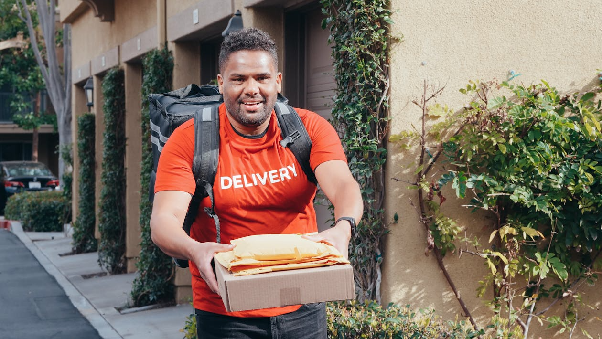
Menu economics is highly important to the success of food delivery. Initial versions of Jumia Food were extremely westernised, featuring pizza, burgers, and fried chicken. They are generally pricier and less frequently ordered, and therefore more prone to economic downturns.
The reason Chowdeck has grown is due to its specialisation in everyday meals, which are local dishes that people already purchase several times a week. This focus, according to BusinessDay, favours higher-order frequency and customer retention. It is much simpler to digitalise current offline behaviour than to establish new consumption patterns.
In markets where Glovo has excelled, it has replicated the same strategy. By collaborating with local food sellers rather than depending on international restaurant chains, you can record deep market penetration and connect with customers at scale. High-frequency orders enhance customer lifetime value and stabilise demand without over-discounting.
Logistics Technology Built for Local Streets
Mapping and navigation are among the least considered problems in African cities. Many addresses are informal, streets are unregistered, and traffic is unpredictable. These environments are associated with generic global mapping tools that fail.
Rest of World reports that early adopters of custom geotagging and OpenStreetMap solutions enabled Chowdeck to navigate informal street networks more effectively. This minimises unsuccessful deliveries, refunds, and rider frustration, all of which silently shrink margins. Conversely, websites that depend heavily on standardised global mapping systems tend to experience higher customer service costs and delivery losses. Urban markets with high density do not have features of logistics technology, but are the business.
The Broader Lesson for Founders and Investors
The split between these platforms can offer a broader lesson to new markets. Scale that lacks sustainable unit economics is frail. Foreign playbooks usually fail when they do not account for the realities of infrastructure, cultural norms, and operational constraints.
The success of Chowdeck and Glovo is not due to their superior funding, but rather to their better alignment with local conditions. To founders, it is plain and simple: make the street, not the slide deck. The message to the investors is also loud: in emerging markets, the moat is local execution.
Your next read: Addressing the Tech Talent Shortage in Africa
Loading, please wait...
Share this article on:
Related quiz
Other
Quiz: Why Chowdeck and Glovo Are Winning Where Jumia Food and Bolt Food Fell Short
Test your knowledge of the African food delivery market, unit economics, and local execution strategies.
Read latest articles

Paul Ugorji’s on Avoiding the Crowdfarming Trap & Bootstrapping ReapVest
September 06, 2026


Stories of Startups that Escaped the Graveyard
August 28, 2026