

Share this article on:


In Morocco, the fresh fruits and vegetables supply chain has long been dominated by a labyrinth of informal brokers, wholesale auction markets (marchés de gros), and fragmented transport operators. Between farm gates in regions such as Souss-Massa and traditional neighbourhood grocers (hanouts) or restaurants in Casablanca, produce routinely passes through four to six intermediaries. This multi-layered chain inflates consumer prices, reduces farmers’ earnings, and drives post-harvest waste rates above 30%.
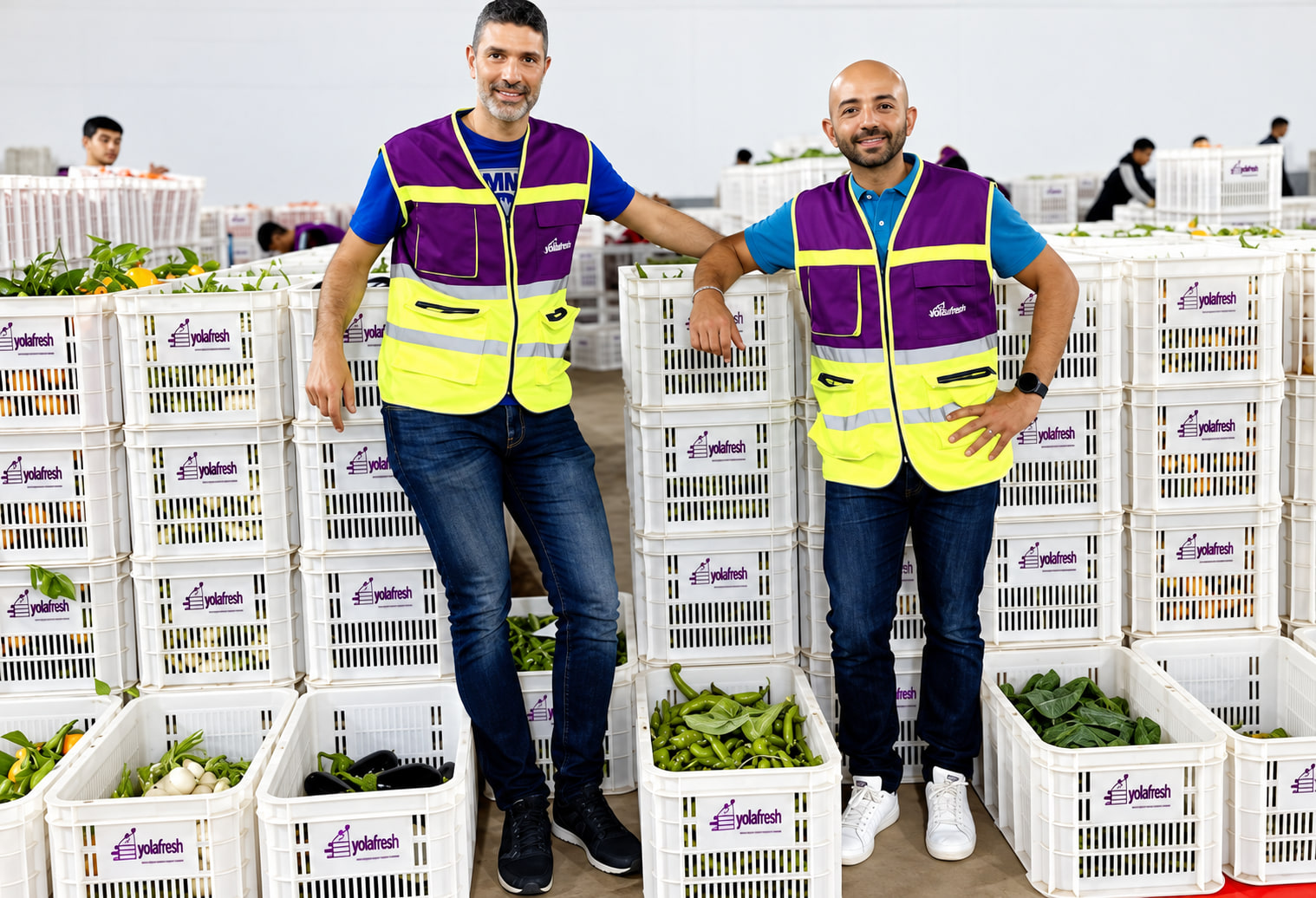
In 2023, two heavyweight Moroccan tech veterans—Larbi Alaoui Belrhiti (former CEO of Jumia Morocco) and Youssef Mamou (former General Manager at Careem and an Uber executive)—founded YoLa Fresh. Their mission was ambitious: to eliminate middlemen by deploying a direct-from-farm B2B procurement network. By leveraging predictive demand algorithms, automated sorting hubs, and consolidated morning logistics, YoLa Fresh promised retailers fresher produce at lower costs, with guaranteed next-day delivery, while offering smallholder growers transparent pricing and reliable purchase volumes.
The Traction
YoLa Fresh quickly became Morocco's breakout agritech play, buoyed by the leadership's institutional pedigree.
The startup moved rapidly to capitalise on its operations:
- Pre-Seed & Seed (2023): Raised an initial $2 million in a round to pilot collection hubs and build its proprietary inventory ledger.
- Pre-Series A (May 2024): Secured a major $7 million funding round led by Al Mada Ventures (the venture capital arm of the pan-African royal holding company), with participation from Algebra Ventures, the Dutch entrepreneurial development bank FMO, E3 Capital, and Janngo Capital.
At its operational peak in 2024 and 2025, YoLa Fresh moved hundreds of tonnes of fresh produce each month along major urban commercial arteries. It partnered with thousands of traditional mom-and-pop retailers and hospitality clients, established regional consolidation centres, and was widely hailed as North Africa’s operational counterpart to Kenya’s Twiga Foods or India’s Ninjacart.
The Cracks
Beneath the surging top-line numbers, YoLa Fresh encountered the same structural bottlenecks that have long plagued physical food supply chain tech across the continent:
The Infrastructure Burn (CapEx vs. Margin)
Fresh produce is notorious for low gross margins (often single digits). To maintain its freshness value proposition, YoLa Fresh had to invest heavily in temperature-controlled warehouses, sorting facilities, and specialised transport fleets. Software efficiencies were continually eroded by rising fuel costs, vehicle maintenance, and storage utility bills.
The Working Capital and Credit Trap
Small retailers in North Africa largely rely on informal cash-flow credit. To retain customers and compete with entrenched local cash-market wholesalers, YoLa Fresh was forced to extend short-term credit lines. In an inflationary environment, delayed vendor collections tied up vital operating reserves.
The Global and Regional Series A Vacuum
Building an integrated farm-to-fork logistics giant requires sustained equity support until immense scale unlocks net operating leverage. By 2025–2026, venture capital allocations to asset-heavy, operationally complex frontier B2B logistics had contracted sharply. Investors, increasingly risk-averse, began demanding clear, immediate EBITDA profitability rather than GMV growth.
The Shutdown
By mid-2026, with runway running thin, management entered active discussions to secure an essential Series A equity round or to arrange a strategic consolidation. However, macroeconomic headwinds and the global retreat of institutional venture funding for capital-intensive commerce plays prevented term sheets from closing.
On 8 October 2026, co-founders Larbi Alaoui Belrhiti and Youssef Mamou confirmed YoLa Fresh's closure. In statements to investors and ecosystem media, leadership acknowledged that the company had been unable to secure the necessary financing to sustain operations until self-sustainability.
The company paused its digital ordering platform and delivery routes, retaining financial advisers to assess structured asset sales and oversee the orderly liquidation of warehouse and physical logistics inventory. The shutdown occurred less than three years after inception, making it one of North Africa's most prominent agritech casualties.
The Post-Mortem Analysis
- The "Gross Margin Reality" of Perishables: Software cannot overcome biological decay. Fresh produce is prone to spoilage, weight loss during transit, and sharp swings in commodity prices. Attempting to capture downstream B2B retail without massive processing or packaged FMCG mark-ups exposes startups to negative operational leverage.
- The Danger of Scaling Asset-Heavy Infrastructure on Venture Equity: Building physical supply chains (cold chains, dark depots, vehicle pools) with short-horizon venture capital creates an existential financing mismatch. Hardware-adjacent operations require asset-backed debt, specialised infrastructure financing, or a blend with commercial banks from Day 1.
- Executive Pedigree Does Not Guarantee Unit Economics: Belrhiti and Mamou brought top-tier operational execution from Jumia, Careem, and Uber. However, the informal B2B supply chain is governed by deeply entrenched, decentralised local relationships that run on zero-overhead cash economics. A venture-funded player with corporate overhead cannot easily undercut traditional wholesale brokers unless it achieves monopolistic density.
Loading, please wait...
Share this article on:
Read latest articles

Why Klump Shuttered Despite Powering Jumia's Checkout
October 31, 2026

Paul Ugorji’s on Avoiding the Crowdfarming Trap & Bootstrapping ReapVest
September 06, 2026
